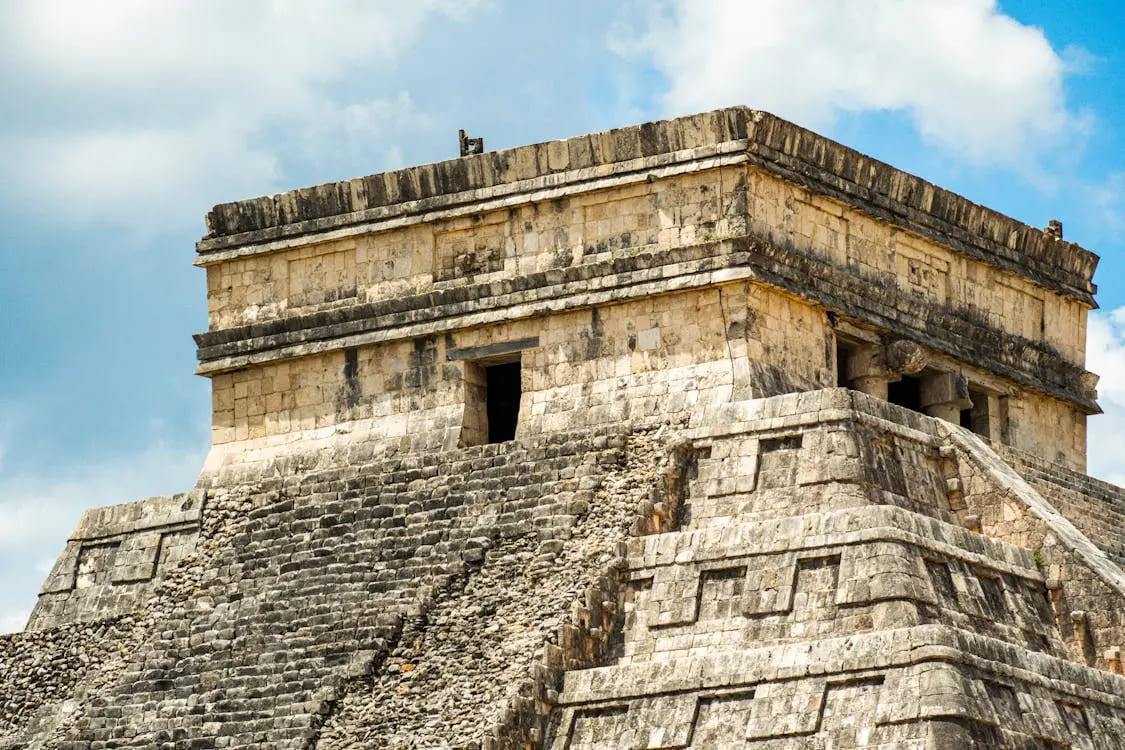
Have you ever heard that the Pyramid of Kukulkán makes a sound when you clap in front of it? It may sound unreal, but it’s true!
Chichen Itzá, known as one of the most mysterious cities of the Mayan civilization and recognized worldwide as one of the Seven Wonders of the Modern World, is also famous for its history and its surprising acoustic effect. This phenomenon happens in some of its structures and has made researchers wonder: How did the ancient Mayans create these effects? Was it intentional?
The “sound of quetzal” is one of the best-known acoustic phenomena that happens when clapping in front of the Pyramid of Kukulkán. If a person stands in front of any of its sides and makes a sharp sound, especially by clapping, it sounds as if a quetzal bird were singing from the top of the pyramid.
It is believed that quetzals were considered sacred birds by the Mayans. They became a symbol of divinity, freedom, and connection with the spiritual world.
Because of their unique characteristics and symbolism, the Mayans believed the quetzal represented the balance between the earthly world and the celestial plane. For this reason, this bird was always present in Mayan culture, and it was also closely related to the god Kukulkán.
What’s interesting is that the quetzal is a bird connected not only to the Mayan culture but also to the Aztec one. In both civilizations, it was linked to their main deities, Kukulkán for the Mayans and Quetzalcoatl for the Aztecs, represented as a serpent with quetzal feathers, symbolizing the union between the sky and the earth.
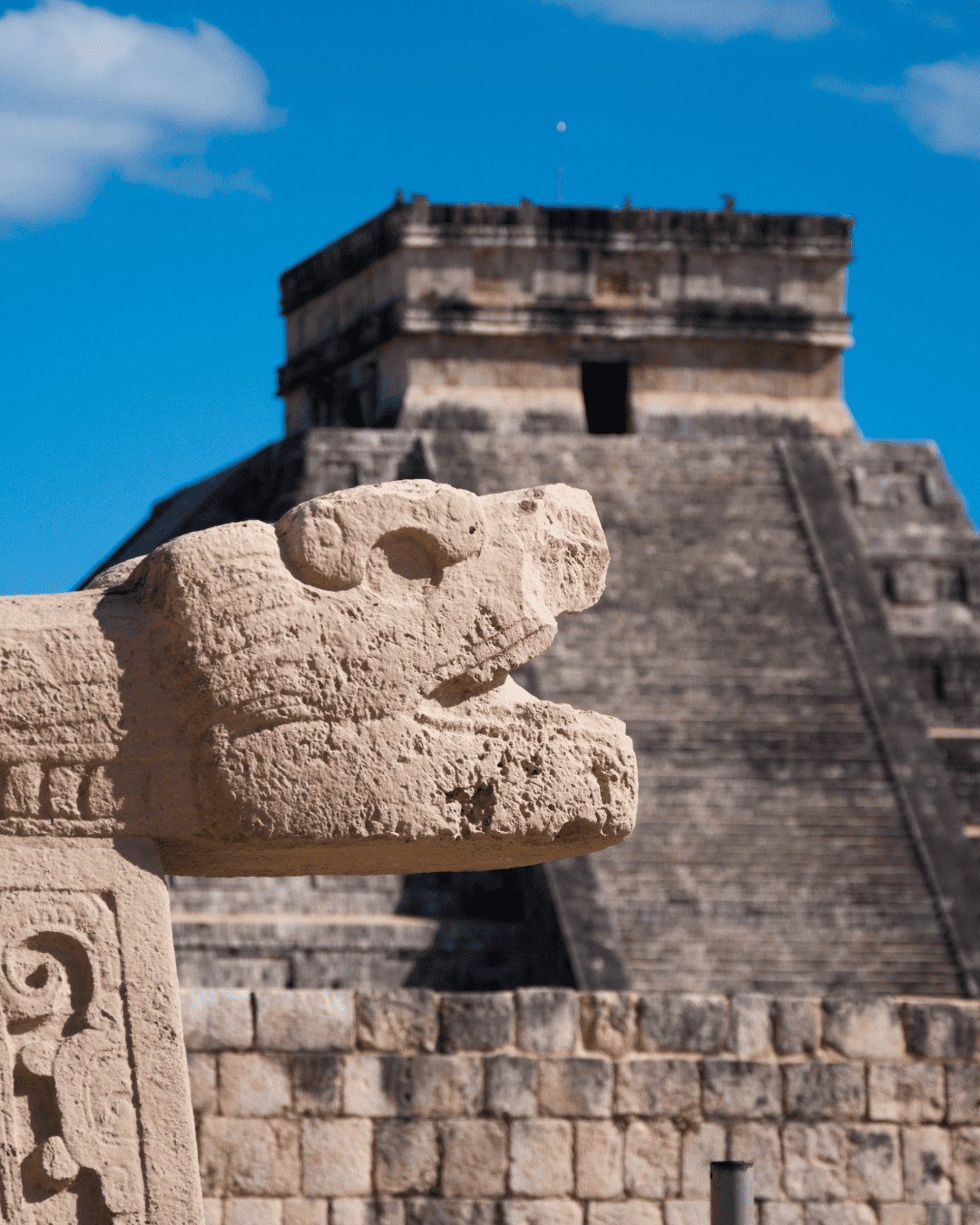
Some experts believe these acoustic properties are the result of Mayan architecture; others argue that the Mayans may have mastered the principles of acoustics.
However, the precision of its construction could explain why this sound is produced every time someone claps in front of it. Researchers believe that the Pyramid of Kukulkán was built intentionally to create this effect, and that the quetzal sound is not just a coincidence.
In fact, several studies using 3D models have confirmed that these acoustic effects are not random but the result of careful planning.
Finally, when someone claps in front of the staircase of El Castillo, the sound bounces off the steps and returns as a modulated echo that resembles the chirping of the bird, the famous quetzal sound.
The quetzal sound at Chichén Itzá remains one of the most fascinating mysteries of the ancient Maya civilization. Whether it was a coincidence or a deliberate acoustic design, it shows the incredible knowledge and precision that the Mayas possessed in architecture, science, and symbolism.
This unique sound, combined with the sacred meaning of the quetzal bird and its connection to the god Kukulkán, reflects the deep relationship the Mayas had with nature, astronomy, and spirituality.
Visiting Chichén Itzá and experiencing the quetzal sound in person is not just a journey through history; it’s an unforgettable moment that connects us to the genius and legacy of one of the most advanced civilizations of the ancient world.

 ESPAÑOL
 FRANCES
 PORTUGUES
 ITALIANO