Maya mythology is one of the most fascinating cultural legacies of Mesoamerica, although it is not very well known.
Like in many other cultures, mythology tries to explain the origin of the universe, the cosmos, nature, and humanity itself. For the Mayans, it was the same. It is believed that the Mayan people once wrote down these legends on paper, but unfortunately, that was not enough to preserve them.
When the Spanish arrived, they burned much of this evidence, which is why today there is little information about their great myths and stories.
What we do know is about some of the most important gods in Maya mythology. Here are the main ones:
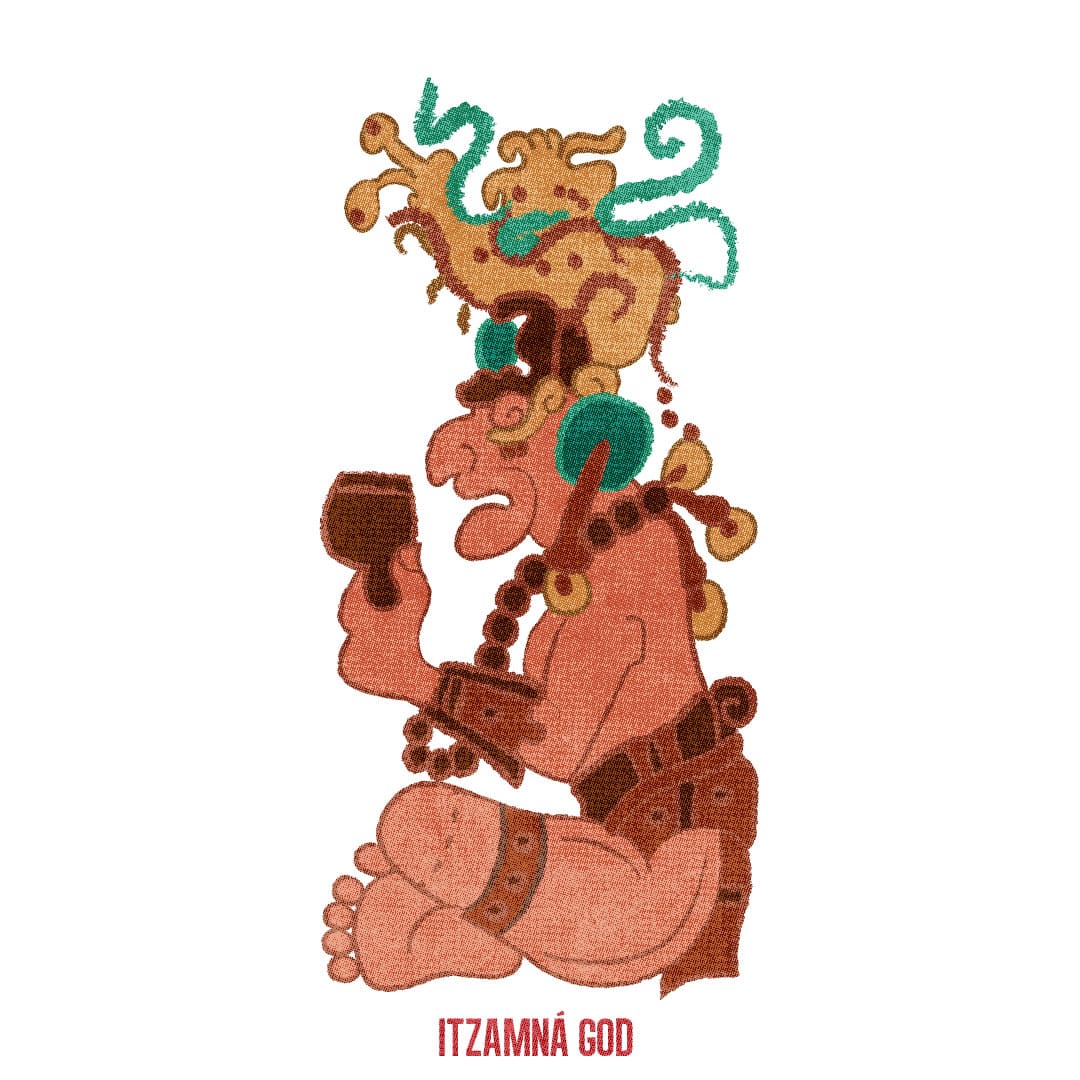
You have probably heard the name Itzamná or maybe read it in an article about places near Chichen Itzá. In Maya mythology, Itzamná was one of the most ancient and powerful gods. He was believed to be the creator of the sky, the earth, and humanity. He was also considered the supreme god of writing and knowledge.
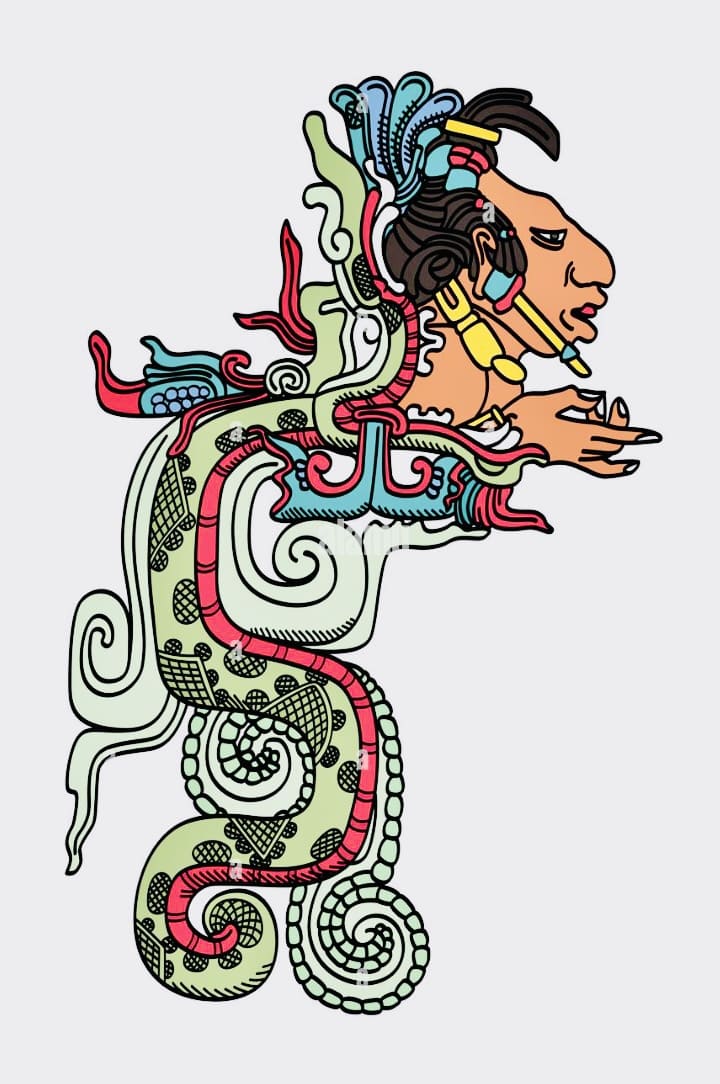
This god in Maya mythology cannot be missed. You have definitely heard of him because of the magnificent Pyramid of Kukulkán, the main pyramid of Chichen Itzá.
Kukulkán is a symbol of wisdom and wind. He was worshiped by the Itzá Mayans in Chichen Itzá, but his origin comes from the Toltecs. They introduced him into Maya mythology when they invaded what we know today as one of the modern wonders of the world. That is why Kukulkán and Quetzalcóatl are so similar and are both represented as a feathered serpent.
For the Mayans, Kukulkán descends from the pyramid twice a year, during the changes of season in spring and autumn. This happens during the spring equinox in March and the fall equinox in September.
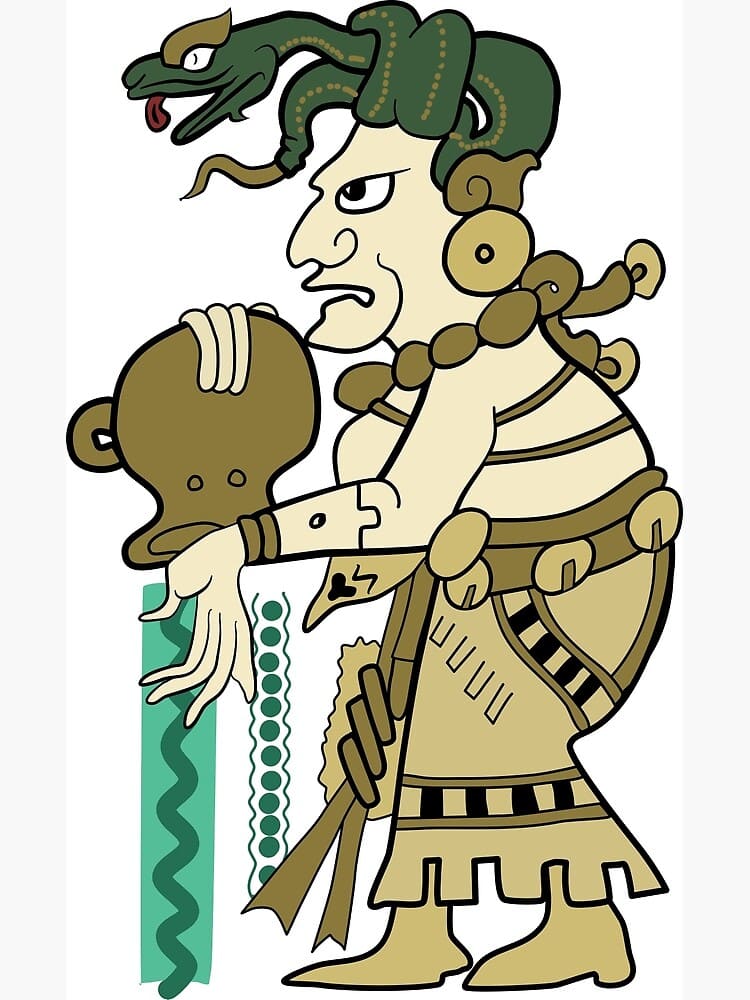
The goddess Ixchel represents femininity, medicine, and fertility. She is one of the most important deities in Maya mythology, and she was also a lunar goddess. According to the same mythology, Ixchel was considered the partner of Itzamná and had control over the fertility of the earth. She is also known as “the goddess of love.”
In Isla Mujeres, there is a sculpture of the goddess Ixchel facing the sea that you can visit. It is also believed that a sanctuary dedicated to this goddess existed on the island of Cozumel.
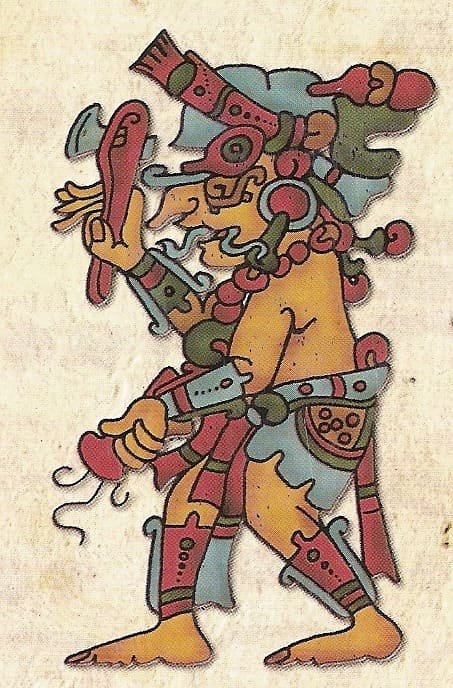
Chaac is one of the most important deities of Mayan culture. He was the god of rain and water, very important for agriculture.
Chaac controlled the rain and the storms. For the Mayans, this was essential because they depended on water for their crops, especially for growing corn, which was the base of their food.
The Mayans believed that Chaac hit the clouds, and that was why the rain started. For this reason, they worshiped him with rituals as a way to give thanks and to avoid droughts.
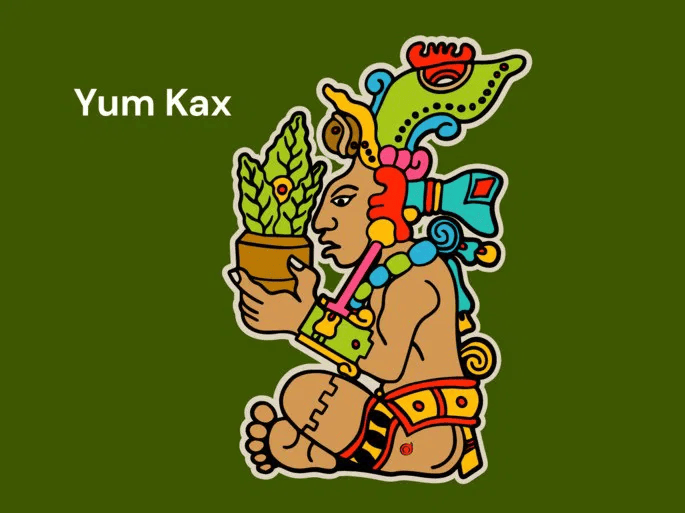
Yum Kax was the god of harvest, vegetation, and agriculture. He was also known by the Mayans as the “lord of the forest.”
This god was one of the most worshiped by the culture because it was believed that he was responsible for good harvests.
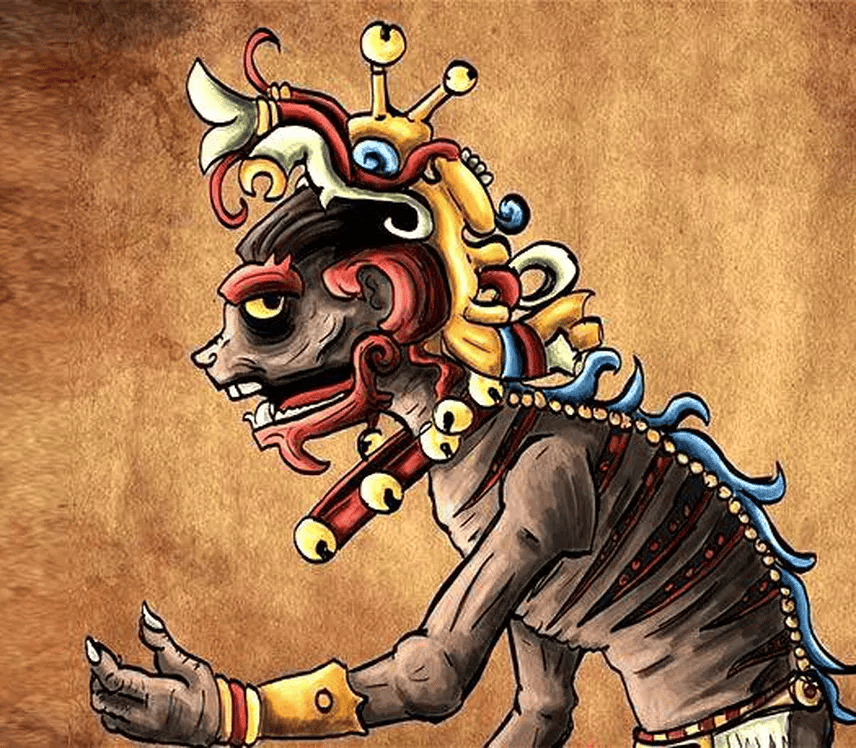
Yum Kimil is the god that is similar to Hades in Greek mythology, the god of death and the underworld.
This Mayan deity was known for being evil. People believed that Yum Kimil walked around the houses of sick people to take them to Xibalbá (the underworld) and then kill them.
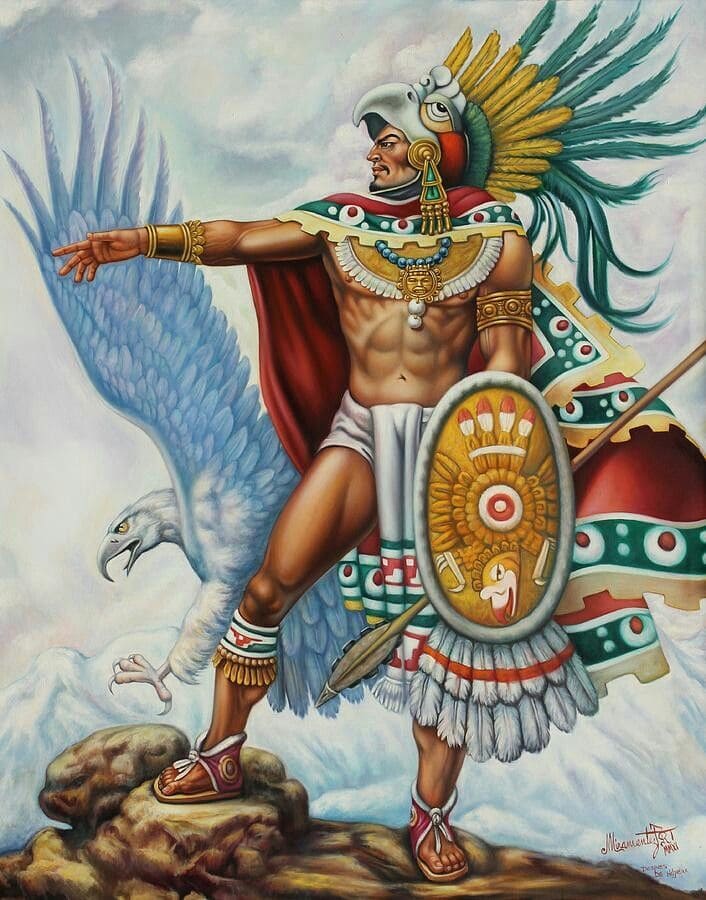
This god is known as the Mayan god of fertility and the ball game. In Maya mythology, he played the ball game every day with his brother Vucub-hunahpú. One day, they were invited by the lords of the underworld as part of a trick. There, Hun-Hunahpú was decapitated, and in his place grew a pumpkin plant, with his head as one of its fruits.
Maya mythology was not only a group of legends; it was a system of thought that explained the universe in three levels: the sky, the earth, and the underworld. The gods constantly interacted with humans, and rituals tried to keep the balance between these planes.
Nature was seen as sacred, and phenomena like rain, the sun, the moon, or eclipses had a spiritual and mythical meaning. Thanks to this worldview, the Mayas developed advanced knowledge of astronomy and architecture, which can be seen in their cities and temples.
Maya mythology played a fundamental role in this ancient culture, as it explained the concepts of life, death, fertility, and cosmic order.
Exploring it today allows us to appreciate its greatness and connect with its beliefs, as if we were taking a journey back in time.

 ESPAÑOL
 FRANCES
 PORTUGUES
 ITALIANO